What Is The Egyptian Eye Of Ra ? Symbolism Explained
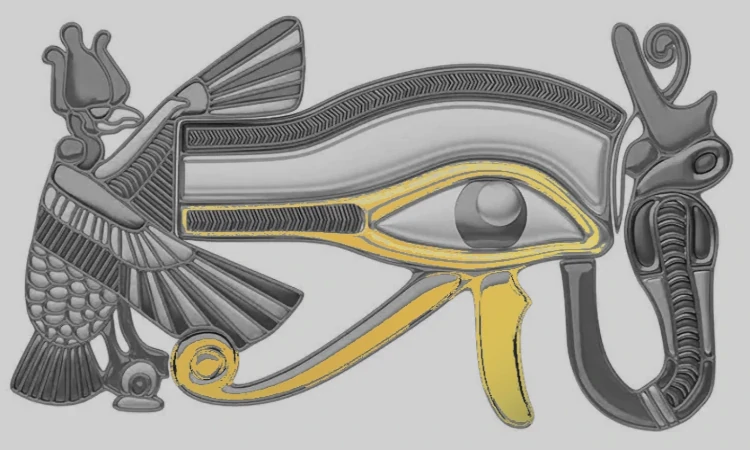
Also referred to as the Eye of Re or Rah, the iconic Ancient Egyptian Eye of Ra is a mystic symbol found in ancient Egypt’s artwork, carvings, and hieroglyphs. It was believed that everyone felt the presence of the eye, and that it could see everything.
The ‘eye of Ra’ represents the sun and is often depicted as an aggressor and a violent power that represents the destructive side of a sun god.
This article will describe the meaning and symbolism of the eye of Ra, why it was vital in ancient Egypt, and how it’s different from the Eye of Horus.
Let’s Dive In.
Who Was Ra?
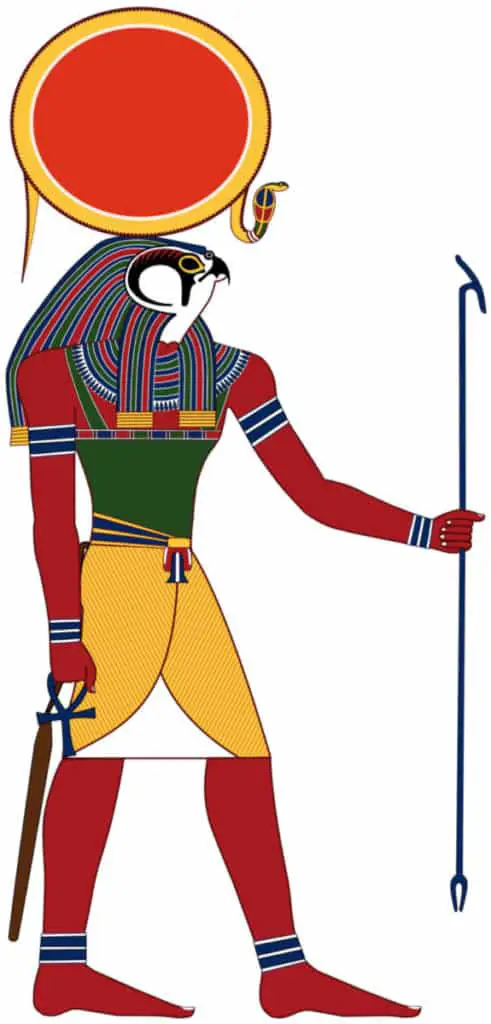
Step into Heliopolis—the “City of the Sun”—where priests watched the dawn like accountants of eternity. Here the Egyptians named the blazing principle that feeds fields, sets calendars, and keeps chaos at bay: Ra. He wasn’t just a sun god. He was a cosmic office: creator, kingmaker, and guarantor of order whose cult rose to dominance by the Old Kingdom (third millennium BCE). As the Rosicrucian Egyptian Museum summarizes, Ra was “king of the deities and the father of all creation,” patron of sun, heaven, kingship, power, and light. egyptianmuseum.org
According to Egyptologist Fayza Haikal (ARCE), Heliopolis/Iunu “witnessed the creation of the universe,” and Ra’s mythic biography grew from that sacred geography. ARCE
Why the Egyptians crowned the Sun
An agricultural people living on a narrow green ribbon through desert had to think solar. Daily light and seasonal heat meant crops, timekeeping, and survival—so the sun became governance in mythic form. By the Fifth Dynasty (25th–24th c. BCE), Ra was “one of the most important gods,” ruling sky, earth, and underworld and often identified with the noon sun. Wikipedia
Historian Joshua J. Mark notes Ra is “arguably Egypt’s most important deity,” not only for the sun’s life-giving force but for how later gods were folded into him. World History Encyclopedia
Ra’s daily circuit (and why it mattered to kings)
Each morning Ra sails the solar barque across the sky; each evening the sky-goddess Nut swallows the sun; at night Ra traverses the Duat (underworld), battling the chaos-serpent and regenerating for dawn. This wasn’t quaint imagery—it was the state’s metaphysics.
Egyptologist Erik Hornung writes the Amduat is “the first religious treatise to insert the king consistently into the daily course of the sun.” Sovereignty, in other words, was expected to ride with Ra. Academia
A museum primer puts the picture in your eye: the night-boat confronts Apep/Apophis; the ram-headed sun god proceeds hour by hour until the horizon births day. Penn Museum
Creator, combiner, and shape-shifter
Egyptian theology is layered, so Ra is both self-created and also merged with other high gods as eras shift: Atum-Ra(creator/setting sun), Ra-Horakhty (“Ra-Horus of the Horizons”), and later Amun-Ra when Thebes rises. You’ll see him as a falcon-headed man crowned by the solar disk, as Khepri the scarab (morning becoming), or as Atum at dusk—one principle expressed in multiple “times of day.” Wikipedia+1
The Eye of Ra: when power overheats
One famous cycle (the Book of the Heavenly Cow) shows what happens when strength outruns proportion. Humanity rebels; Ra sends his Eye—often Sekhmet—to punish; slaughter races beyond justice. Ra floods the fields with beer dyed red; the Eye drinks, sleeps, and wakes as Hathor, gentler and life-affirming. The point lands clean: unrestrained power destroys what it claims to protect. ARCE
Why pharaohs wore the fire
On royal brows the uraeus—a rearing cobra often coiled around the sun disk—signals Ra’s living protection and the pharaoh’s obligation to guard Ma’at (order/balance) against isfet (chaos). The Rosicrucian page (and standard references) tie this cobra power directly to kingship and Ra’s authority.
What Is The Eye Of Ra?
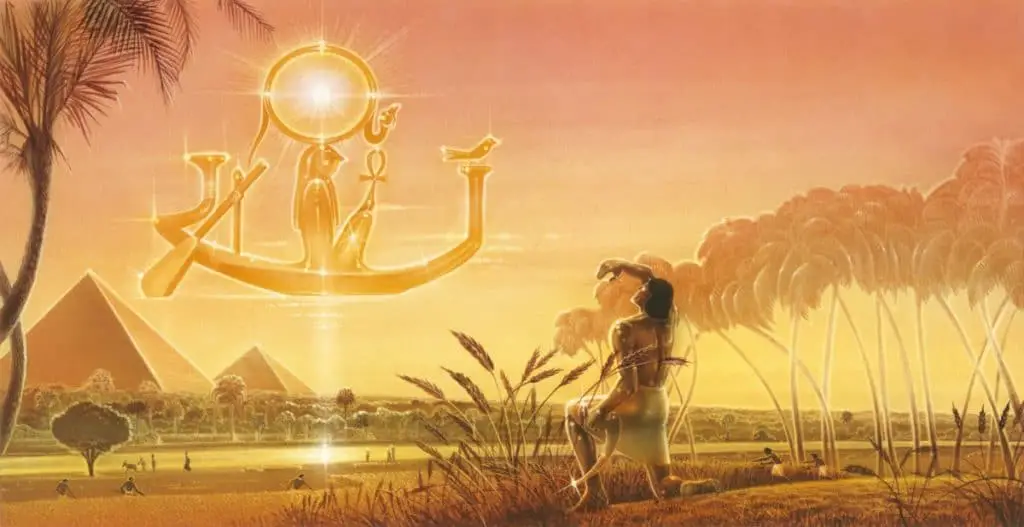
The ‘Eye of Ra’ is among the most ubiquitous and well-loved symbols in ancient Egyptian culture. Its origin story has roots in hate, protection, vengeance, fury, strength, violence, and power.
Origin and Mythology Behind The Eye Of Ra
Ancient Egyptian lores and legends bear a boatload of stories about the origin of the Eye of Ra.
We’ve already learned of the most benevolent myth above—that the Eye of Ra was the sun god Ra’s aggressive daughter brought to earth for vengeance against humanity.
In yet another dramatic myth, Ra’s children disappear after setting out for an adventure. Ra removes his eye and sends it out to look for them, only for the eye to come back with the children and find that another eye has grown in its place.
Enraged and envious of having her position stolen. Ra’s eye threw a fit. To appease her, Ra turned her into a “uraeus” and wore it on his forehead to stand guard.
The uraeus is an Ancient Egyptian Symbol depectied in the form of two cobras wrapped around a sun disk, which represents the Eye of Ra.
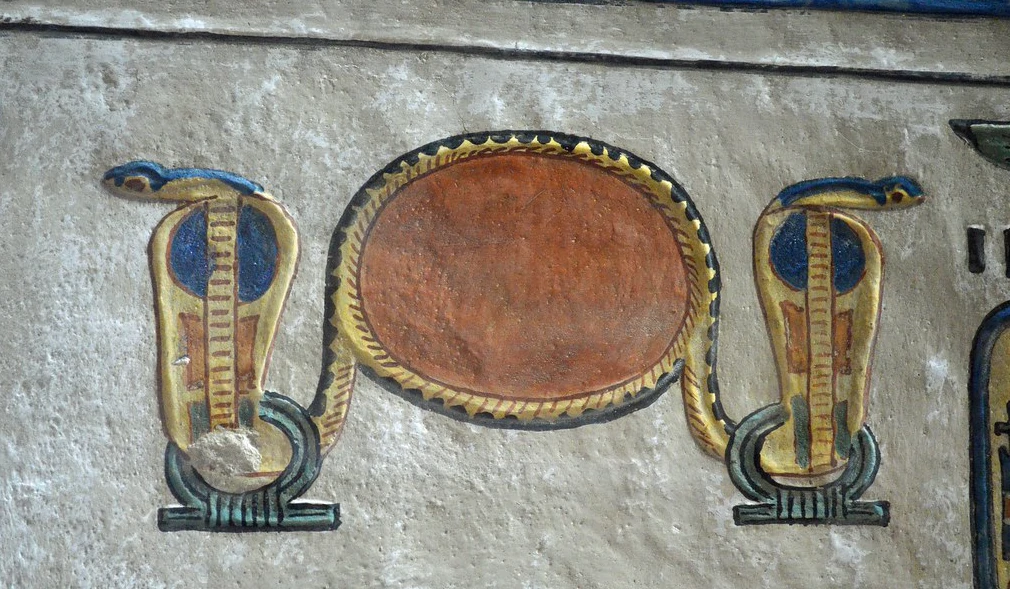
According to ancient Egyptian myths, the Eye of Ra symbol was the female counterpart (mother, daughter, sister, and companion) of the sun god Ra. It embodied female divinity, and Egyptians viewed various goddesses such as Bastet, Hathor, Mut, Sekhmet, and Wadjet as personifications of the symbol.
The Eye Of Ra And Goddess Wadjet
Wadjet, was one of the Egyptian goddesses that personified the ‘ Eye of Ra’ symbol.
The goddess Wadjet is connected to the Eye of Ra in a few different way. First, Egyptian mythology describes the goddess Wadjet as the daughter of God Atum (Atum would later be known as Ra).
In fact, Goddess Wadjet is depicted as the eye that Ra sent to search for his lost children and bestowed honor upon her by placing her on his forehead, making her a protector of kings in cobra form (the Uraeus Symbol).
Wadjet also presents as the living form of the Uraeus symbol, the sun disk seen rearing from a Pharaoh’s forehead. The uraeus symbol (which is symbolic of the Eye of Ra) was believed to be a forceful defender of the Pharaohs and protected the rulers by spitting fire on enemies.
Other times, ancient Egyptians referred to the Eye of Ra simply as Wadjet or the Eye of Wadjet. The ancient Goddess Wadjet is revered as a children’s protector, goddess of childbirth, and protector of Egyptian rulers, playing the role of the Eye of Ra.
Meaning Of The Eye Of Ra
If you’re considering wearing the ‘Eye of Ra’ as a lucky charm, or getting an eye of Ra tattoo read on!
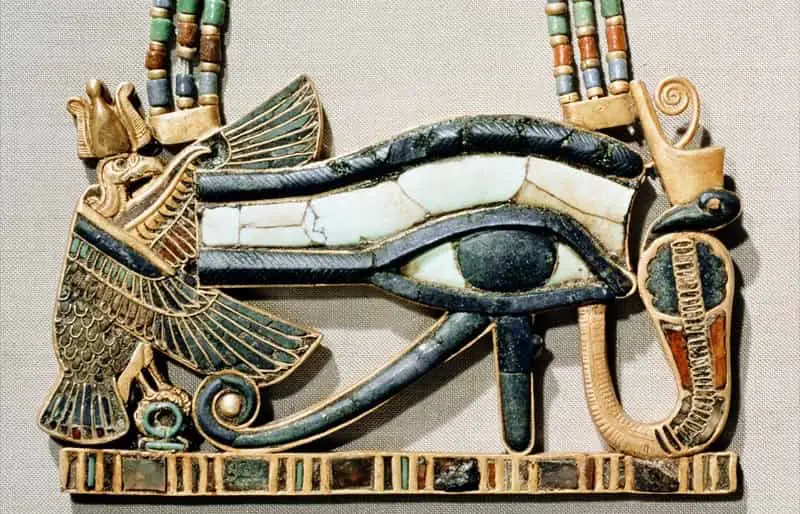
1. Eye Of Ra: Power
The Eye of Ra symbol became a powerful amulet, souvenir, and body marking for Egyptians to ward off evil entities or negative energy spells and restore balance.
It is considered so powerful that we are advised to be careful when invoking its energy as its destructive power can become overwhelming and violent.
2. Eye of Ra: Fertility And Birth
This eye goddess embodied female divinity for Egyptians. She took on the role of Ra’s mother and companion, roles that stand for femininity, procreation, childbirth, mothering, and fertility.
And as Ra’s constant companion, the Eye of Ra also helped in life-giving duties.
3. Eye of Ra: Great Power And Strength
The Eye of Ra was powerful and protective. But Egyptians also acknowledged that it possessed an aggressive and destructive force. These attributes equate the eye to the useful yet fierce heat of the sun.
It was a friend because it represented life on earth and people relied on its power. However, it could quickly become an enemy to humans, the lands (take the deserts, for instance), and even other deities.
4. Eye of Ra: A Symbol Of Protection
Ra transformed the Eye of Ra into a fearsome goddess and a violent, dangerous deity he considered vital for offering protection to his people, children, and rulers alike.
These vital roles signified divine protection for anyone who wore the Eye of Ra symbol, including Pharaohs who used it as a weapon against perceived enemies.
Even today, the Eye of Ra is worn as a good luck charm, drawn on clothing pieces, tattoo designs, pendants, or caps.
5. Is The Eye Of Ra Evil ?
Many of us would argue that the Eye of Ra is an evil and destructive emblem. It couldn’t be further from the truth!
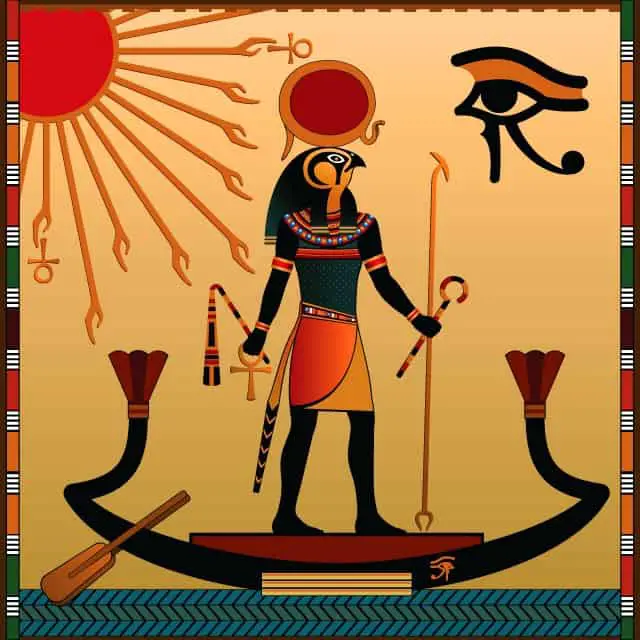
The dangerous attributes of this emblem were celebrated in Ancient Egypt. The comforting aspects of the Eye of Ra signified power and invoked the protection of the divine. As such, the symbol isn’t evil; instead, it repels evil.
As a symbol of protection, it protects you from evil elements and enemies, but it doesn’t represent evil itself. In fact, it was thought to balance energies and create harmony in ancient Egyptian cultures.
The Difference Between The Eye Of Horus And Ra
Both the Eye of Horus and Eye of Ra are popular ancient Egyptian symbols and are often used interchangeably in Ancient Egyptian belief systems. They also look pretty much alike, and because of these, the two emblems are easily confused.
But you can easily distinguish between the Eye of Horus and Ra. They have varying origin stories, symbolisms, and the eyes linked with them.
This section will let you in on the major differences between the two emblems so you’ll never confuse them again.
The Eye of Horus, also known as the Egyptian eye, is the left eye (the eye located on your right-hand side if you view Horus from the front). The Eye of Horus is linked to the moon and represents sacrifice, fertility, wisdom, health, healing, and protection.
He was depicted in various physical forms, including the falcon and human that combined in syncretism to create a new being.
The right eye always symbolizes the Eye of Ra (the eye located on your left side if you view Ra from the front). The Eye of Ra is usually associated with the sun. It signifies life-giving power, fertility, aggression, and destruction.
Final Thoughts: Eye of Ra
The Eye Of Ra was the powerful deity who offered protection by instilling fear of violence. The Eye of Ra’s long history and the symbolism made it a protective talisman that kept guard against evil and blocked harm for Egyptians in the Pharaoh era.
Some new agers also believe in its good luck charm, making the symbol popular among fashion designers.
Would you wear an amulet of the Eye of Ra?
Check Out Our Other Interesting Articles About Ancient Egypt…
- The Ankh (unk) Symbol: Ancient Egyptian Meaning
- How Old Are The Pyramids in Egypt? The Science
- How Old Is The Great Sphinx of Giza ? New Evidence
- What Is The Egyptian Eye Of Ra ? Symbolism Explained
- The Eye of Horus vs. The Eye of Ra | Meaning
- Did Ancient Civilizations Use Psychedelics? You Bet They Did !
- Scarab Beetle Symbolic Meaning | History & Origin
**Thanks For Reading — Seriously**
If you made it this far, we genuinely appreciate your time. The Conscious Vibe exists to ask better questions, explore deeper ideas, and share curiosity that might spark a new idea or a new perspective.
If you found this article helpful, let us know and if this sparked something in you — share the vibe.
You may have noticed that there are no ads here. No popups. And we like it that way.
If you feel like donating to support more informative thought provoking ideas and information, we sincerely appreciate it !!
Check out our donation page to help Support Conscious Vibe
It helps cover servers, admin tools, and pretty much keeps the lights on around here.