
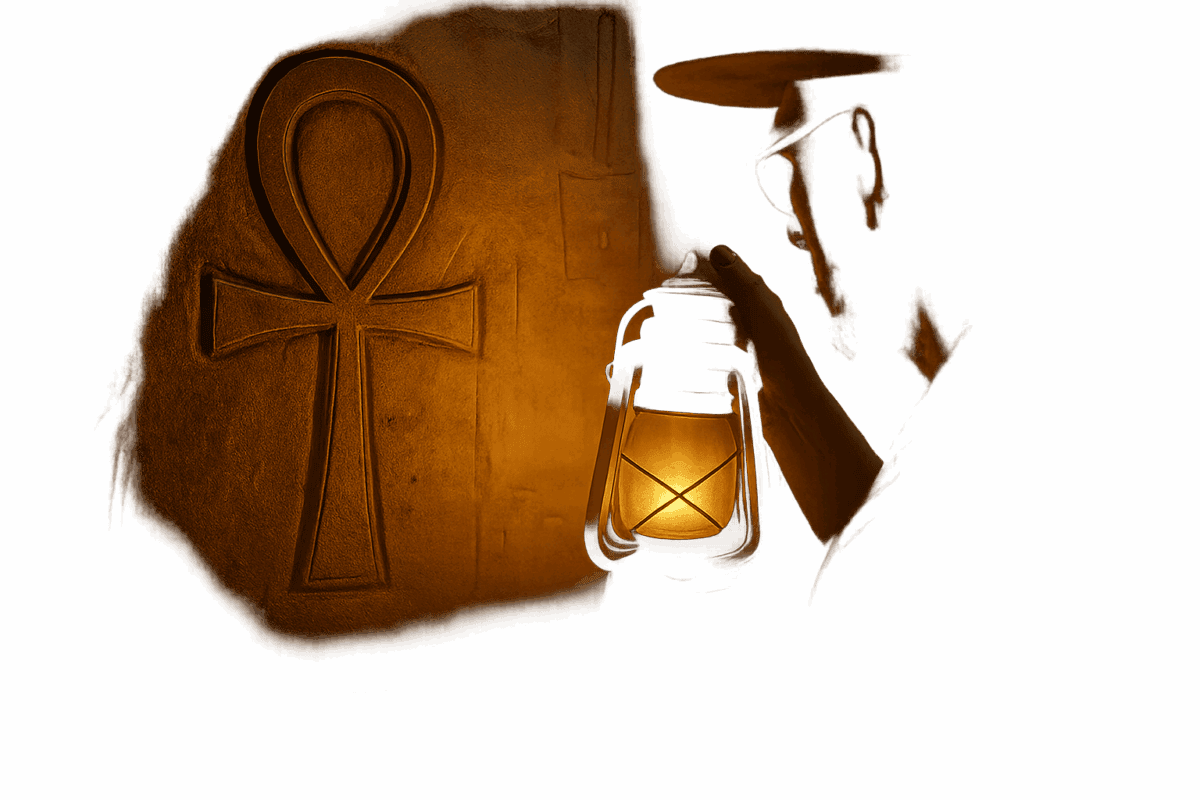
The Ankh: Sacred Symbol of Life, Legacy, and Cosmic Intelligence
Some symbols don’t just survive time — they transcend it.
The Egyptian Ankh is one of those symbols. Etched into temple walls, held in the hands of gods, and worn across centuries, this looped cross has whispered its message through more than 5,000 years of human civilization.
But the Ankh is not merely an archaeological relic. It is a living symbol — one that still pulses with meaning across spiritual traditions, philosophical systems, and conscious cultures today. From sacred geometry to modern jewelry, the Ankh remains a bridge: between heaven and earth, life and death, masculine and feminine, ancient and future.
So what did it mean to the ancient Egyptians — a people who synchronized their architecture with star alignments, saw death as a doorway, and regarded symbols as sacred technology? And why are so many today — from mystics to minimalists, from artists to activists — still drawn to this ancient sign?
In this article, we decode the Ankh’s origins, symbolism, and spiritual resonance. Drawing on archaeology, mythology, cosmology, and culture, we explore how this timeless symbol may hold not just the wisdom of the past, but the blueprint of a more conscious future.
What Is the Ankh? Origins & Historical Context
The Ankh — often called the “Egyptian symbol of life” — is one of the most enduring icons of the ancient world. First appearing as a hieroglyph, it literally represented the word for “life” in the Egyptian language: Ꜥnḫ.
Over time, that simple character transcended its written role to become a deeper symbol — one tied to vitality, eternity, and divine protection. Yet despite its widespread use, the exact origin of the Ankh’s shape remains an open question. As Egyptologist Dr. Andrew H. Gordon notes:
“There is NOT a complete consensus on what physical object the Ankh sign originally represented.”
Some theories suggest the Ankh may have symbolized a sandal strap, a ceremonial tool, or even a stylized union of sexes — but no interpretation has been universally agreed upon.
What scholars do agree on is that the Ankh dates back to at least Egypt’s Earliest Dynastic Period, between 3150 and 2613 BCE, making it over 5,000 years old.
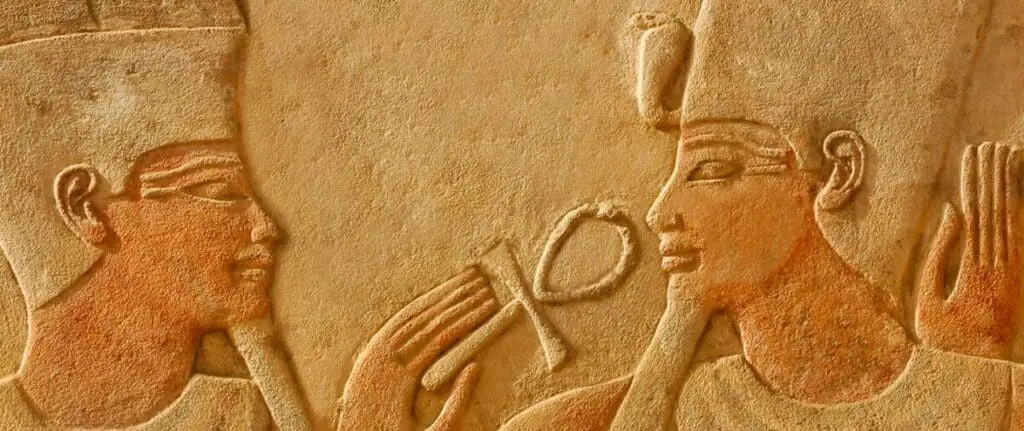
The oldest known depictions show gods like Isis and Osiris holding the Ankh in their hands, often by its loop, as if offering the essence of life itself. These images were carved into tomb walls and temple reliefs, reinforcing the Ankh’s sacred association with royalty, divinity, and the afterlife.
During the New Kingdom era (circa 1550 BCE), the symbol became more publicly recognizable, often seen in the hands of pharaohs and priests as a sign of eternal life, resurrection, and divine authority. Its widespread use across funerary art, religious iconography, and royal regalia solidified the Ankh as a visual shorthand for the life force that bridges heaven and earth.
As cultural scholar and historian Adele Nozedar reflects:
“The volume of meaning that can be squeezed from such a simple symbol is awe-inspiring.”
Though its origins may be lost to time, the Ankh continues to speak across millennia — a timeless glyph, carrying the imprint of a civilization that saw life not just as a biological fact, but as a sacred continuum.
Ankh Symbolism in Ancient Egypt
When we think of Ancient Egypt, familiar icons rise to mind: Cleopatra, King Tut, the Pyramids, the Sphinx. But it’s easy to forget just how vast the Egyptian timeline truly is — a civilization that spanned over 3,000 years. For context: Cleopatra lived closer to the invention of the internet than to the construction of the Great Pyramid.
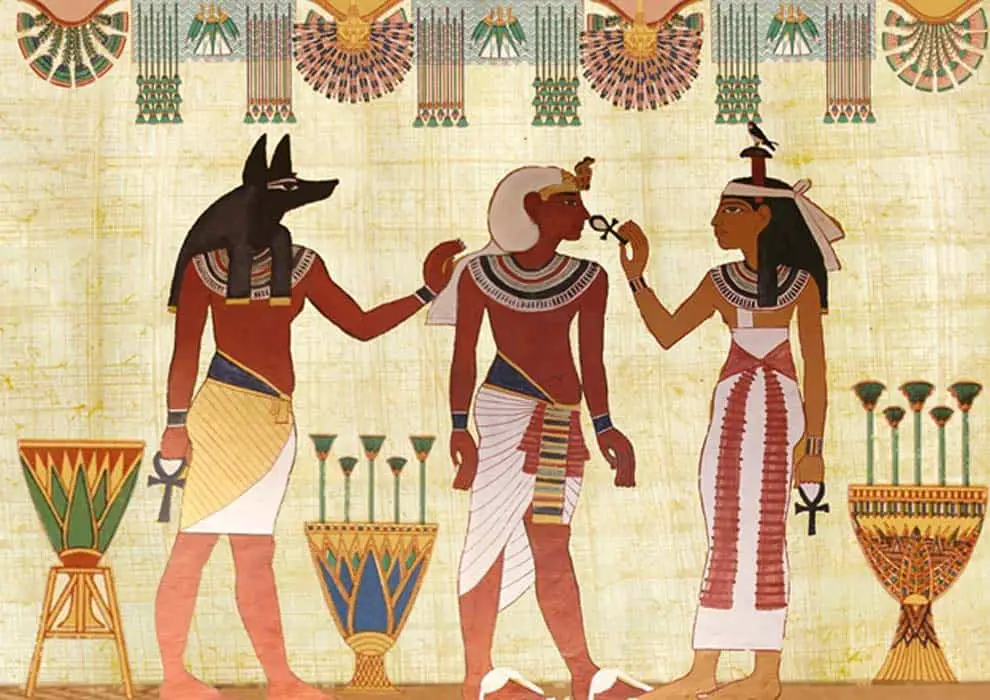
Across this immense sweep of time, few symbols remained as enduring — or as spiritually charged — as the Ankh. Though originally a hieroglyph meaning “life,” the Ankh evolved far beyond linguistic function. It became a sacred emblem that represented divine vitality, spiritual authority, and the eternal nature of existence.
From temple walls to sarcophagi, the Ankh appears again and again — always held in the hands of gods, pharaohs, and priestesses. Over centuries, its meaning deepened, transforming into a cosmic shorthand for life’s sacred continuity.
The Ankh as a Symbol of Life
At its core, the Ankh is a glyph of life — or more precisely, the breath of life. The Egyptian word it represents, Ꜥnḫ, conveys not just biological life, but the animating spirit that flows through all things.
Gods are often depicted extending the Ankh to pharaohs in ritual scenes — held delicately at the nostrils, as if offering the sacred breath of vitality and divine right. This gesture symbolized not just physical life, but a transference of spiritual authority, immortality, and soul-purification.
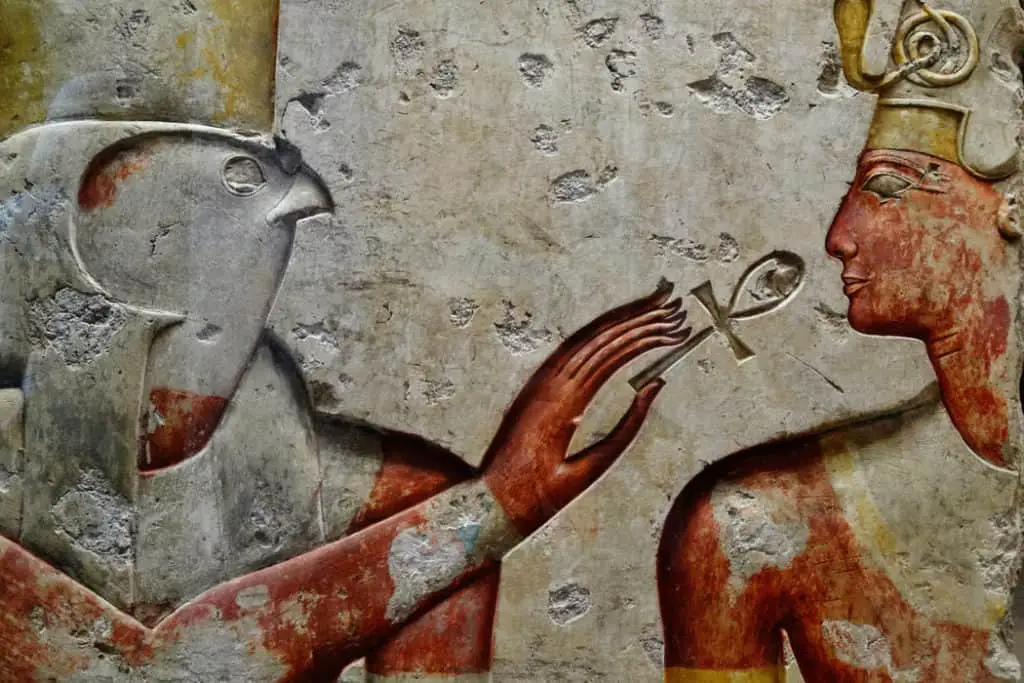
The symbol was carved into temples, worn on amulets, and painted into tombs — always echoing the message: life is a sacred force, and its continuation is divine.
The Ankh and the Afterlife: Spiritual Symbolism
In ancient Egyptian cosmology and in the book of the dead, death was not the end — it was a gateway. The Ankh became a symbolic key to that passage. It was often placed within tombs, carved into sarcophagi, or painted on burial walls to ensure safe passage to the afterlife.
In hieroglyphic art, gods and goddesses are frequently shown presenting the Ankh near the lips of the deceased — a final breath of divine life that would carry the soul beyond mortal existence. This ritual imagery underscores a central Egyptian belief: that life and death are part of the same sacred continuum.
Some Egyptologists propose that the Ankh’s presence in burial contexts may also represent the union of heaven and earth — a symbolic bridge between the mortal world and the realm of the gods.
The Ankh as the Union of Heaven and Earth
Referred to by some as the “Key of the Nile,” the Ankh is deeply connected to the rhythms of the sun and the sacred geography of Egypt. As the sun rose over the horizon each day, reflected in the life-giving Nile, the Ankh became a visual metaphor for cosmic balance.
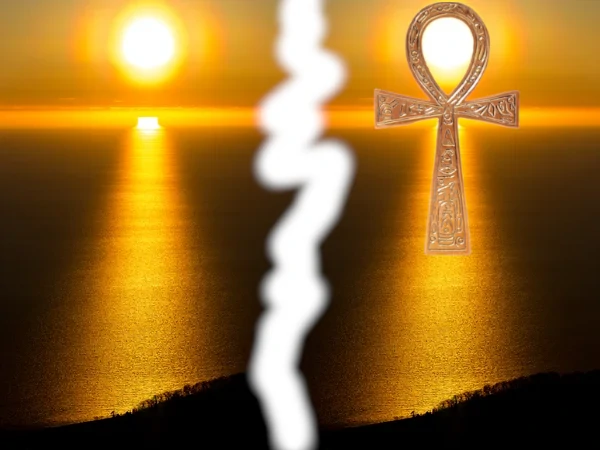
Professor Joshua J. Mark of WorldHistory.org writes:
“The Ankh represents the sun coming over the horizon, and the union of heaven and earth.”
Egyptologist Dr. Michael Poe offers further insight: the Ankh’s circular loop may symbolize the sun itself, the horizontal bar the horizon, and the vertical stem the path of sunlight reflected in the Nile’s waters.
This celestial interpretation links the Ankh with solar cycles — east and west, life and death — and reinforces its role as a symbol of eternal renewal and the life-sustaining connection between cosmic and earthly realms.
The Ankh and the Goddess Isis
The Ankh is intimately associated with Isis, the divine mother and protector in Egyptian mythology. Her story — one of resurrection, devotion, and cosmic magic — elevated the Ankh’s meaning beyond life to include divine love, rebirth, and protection.
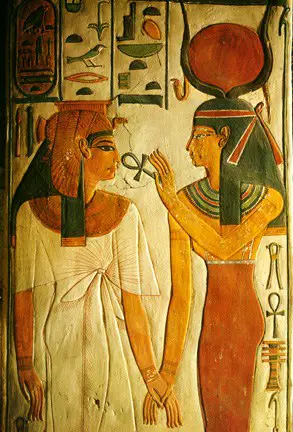
In myth, Isis reassembled the dismembered body of her slain husband Osiris, breathing life back into him so he could reign in the afterlife. She is often shown holding the Ankh in temple carvings, using it to grant vitality or shield the dead during their journey beyond.
Egyptologists believe the Ankh may even share roots with the “Knot of Isis” — also known as the tyet — a related symbol of protection, fertility, and the feminine force. More on that in the next section.
Reflection: Is it possible the Ankh’s shape — looped, balanced, rising — mirrors the very rhythm of life itself? A sacred geometry not just of symbol, but of soul?
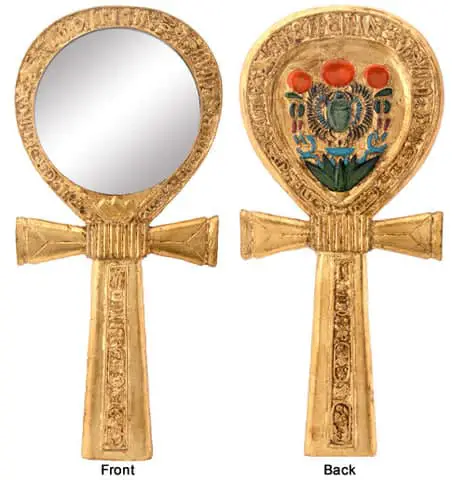
The Tyet (Knot of Isis) and Its Connection to the Ankh
Closely related to the Ankh is another ancient symbol: the Tyet, often called the “Knot of Isis.” Resembling the Ankh in shape but with arms that curve downward, the Tyet also dates back over 5,000 years and is frequently found in burial sites alongside the Ankh.
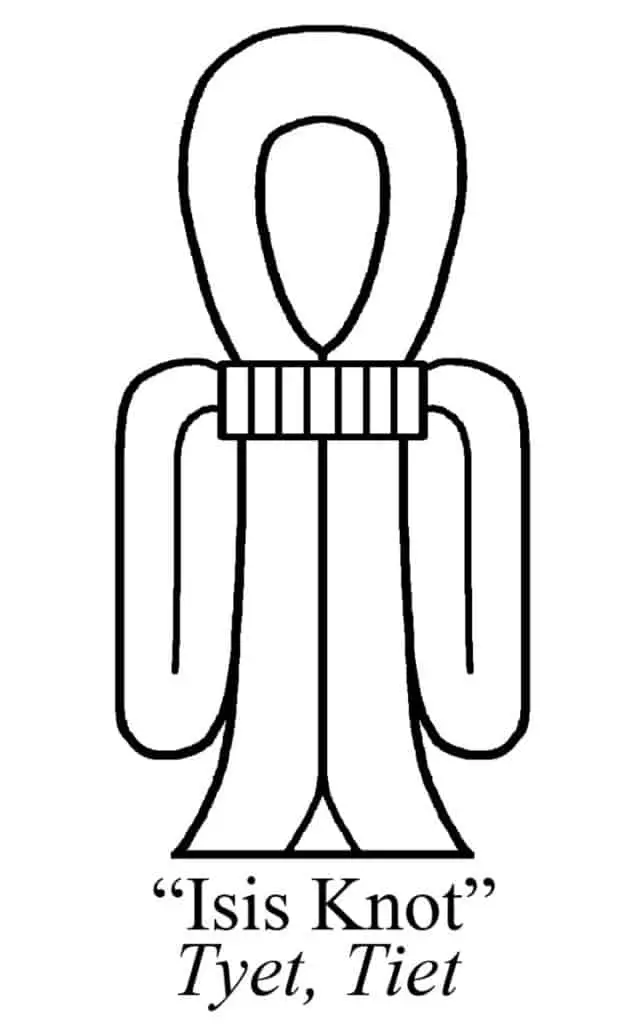
Scholars have debated its origin. E.A. Wallis Budge, a foundational Egyptologist, once proposed that the Tyet may have evolved from Isis’s belt buckle or ceremonial sash. Other interpretations suggest it may represent protective cloth — possibly even linked to menstruation rituals, further emphasizing Isis’s connection to fertility and feminine cycles.
By the New Kingdom era (c. 1550–1070 BCE), both the Ankh and the Tyet were firmly tied to the cult of Isis. Together, they formed a powerful symbolic pairing — life and protection, divine authority and sacred care — with Isis at their center.
The Ankh in Royalty and Divine Kingship
Beyond the goddess Isis, the Ankh became a potent symbol of royal divinity and cosmic order. As Egypt entered its New Kingdom period, the symbol was regularly incorporated into public iconography, linking the power of the pharaoh to the authority of the gods.
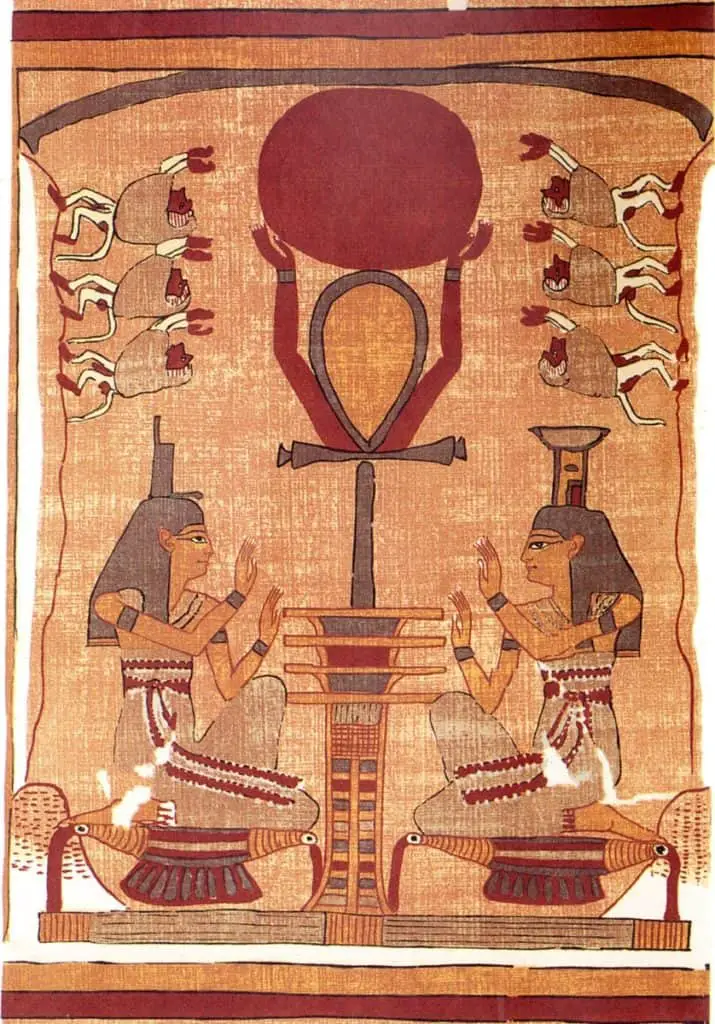
The great pharaoh Ramses II (1279–1213 BCE), often regarded as Egypt’s most celebrated ruler, frequently commissioned hieroglyphs showing himself grasping the Ankh or receiving it from gods like Amun-Ra — the solar deity with whom he identified. These depictions reinforced his status as a “living god on Earth”.
Even in the 21st century, the legacy continues. A 2018 archaeological discovery at the Temple of Kom Ombo revealed a new statue of Ramses holding the Ankh, still affirming its symbolic role in expressing eternal life, divine rule, and sacred lineage.
The Ankh as a Symbol of Fertility and Creation
One of the most enduring interpretations of the Ankh’s form is its link to sexual union and generative power. Scholars and esoteric schools alike have proposed that the Ankh’s shape symbolizes the sacred union of masculine and feminine energy.
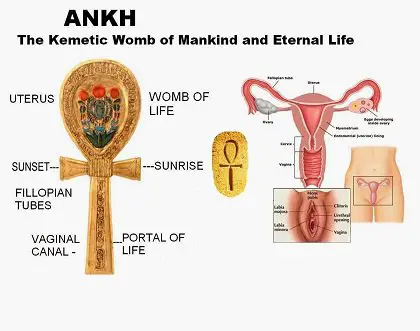
The loop at the top is often viewed as a representation of the womb or female principle, while the vertical stem may reflect the male principle. Together, they form a harmonic whole — a geometric metaphor for the act of creation itself.
In this context, the Ankh is not merely a sign of individual life, but of the life force itself: the primordial spark that animates all beings. This interpretation also resonates with the mythic pairing of Isis and Osiris, whose divine union resulted in the birth of Horus — a god of kingship, vision, and cosmic balance.
Reflection: Is it possible the ancients encoded more than biology into the Ankh’s shape — perhaps a blueprint for the balance of energies that give rise to all life?
Modern Meaning and Spiritual Revival of the Ankh
Though the precise origins of the Ankh may be obscured by time, its essence has never truly vanished. Like an ancient frequency still echoing through modern consciousness, the Ankh continues to pulse with symbolic meaning across millennia.
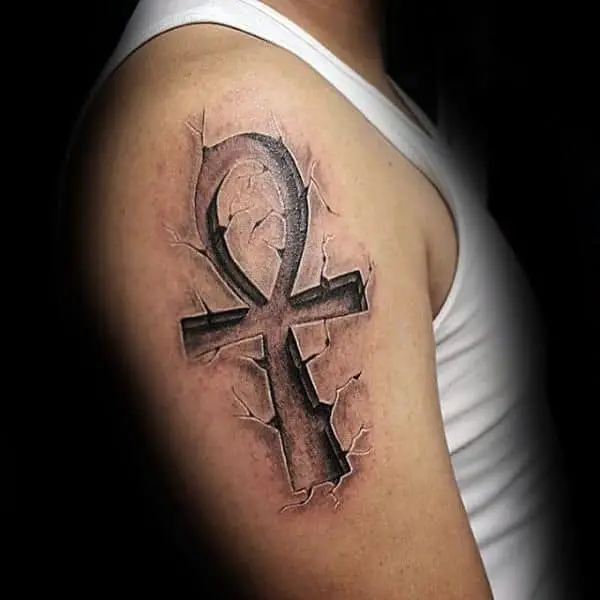
Today, it stands not only as a relic of ancient Egypt but as a global symbol of life, balance, and spiritual power.
Even if most people couldn’t explain its full historical depth, many instinctively recognize it as an emblem of Egypt’s mystique — a civilization that once aligned its monuments with the stars, its medicine with plants, and its symbols with the sacred geometry of the cosmos.
In that way, the Ankh remains a kind of cultural fossil — a shape so archetypal that it still stirs something within us, even in the age of quantum computing and social media.
A reminder that long before the iPhone, blockchain, or ChatGPT… we encoded wisdom in symbols.
The Ankh’s 20th-Century Revival: From Kemetism to Counterculture
The Ankh’s symbolic rebirth in the modern era traces back to the 1960s and 1970s — a time marked by social upheaval, spiritual searching, and resistance to materialism. In this climate, the Ankh found renewed life through the rise of Kemetism (also known as Egyptian Neopaganism), a movement that sought to reclaim and reinterpret the spiritual traditions of ancient Egypt.
Worn by artists, activists, and seekers, the Ankh became a powerful anti-establishment symbol — representing life beyond capitalism, and spirituality beyond dogma.
Even pop culture icons like Elvis Presley wore Ankh jewelry as a statement of sacred identity.

Reflection: What if the reappearance of ancient symbols in modern times is less about fashion — and more about remembering who we really are?
Wearing the Ankh: Jewelry and Daily Symbolism
In the ancient world, Ankhs were cast in gold and copper — metals chosen for their association with the sun and vitality. Today, Ankhs appear in all forms of wearable art: necklaces, rings, earrings, tattoos, even digital avatars.
While modern versions may be made from stainless steel, wood, or even 3D-printed materials, the intention often remains the same: to carry with us a symbol of divine life, inner balance, and sacred identity.
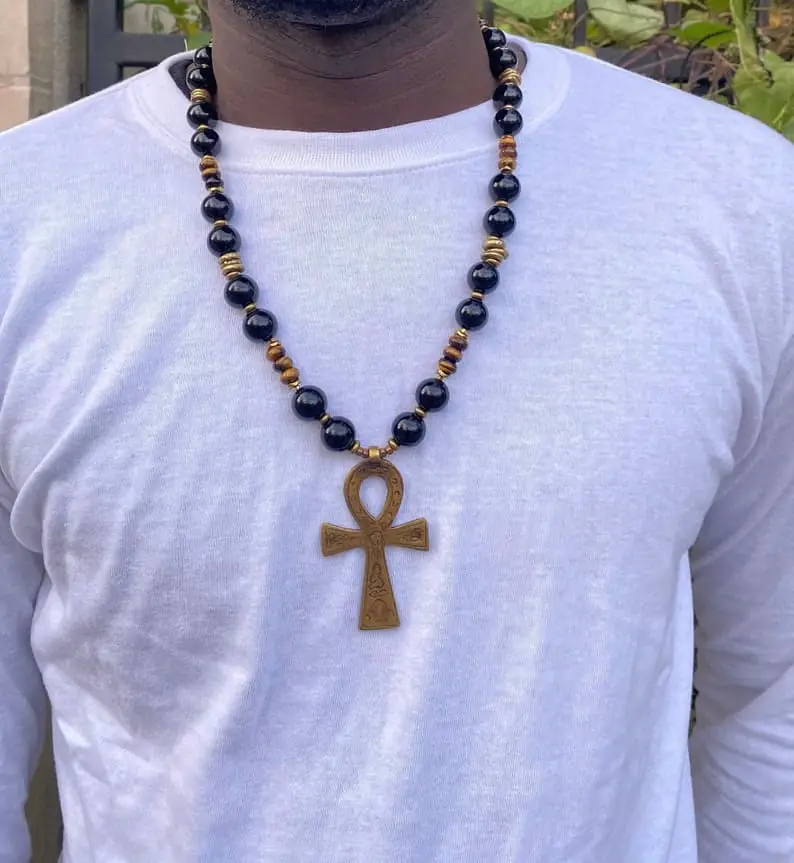
For some, it’s fashion. For others, it’s faith. For many, it’s a silent declaration of values — that life is sacred, that power is spiritual, and that we are part of something much older than we’ve been taught to believe.
“The Ankh isn’t just jewelry — it’s a spiritual frequency, cast into a 3 dimensional object.”
— Anonymous graffiti found on a temple wall… or maybe just a Brooklyn café
Is It Okay to Wear the Ankh as a Christian?
This is one of the most frequently asked — and deeply personal — questions about the Ankh. Can a symbol from ancient Egypt, often associated with gods like Isis and Osiris, align with a Christian worldview?
The answer, like the Ankh itself, depends on context and intention.
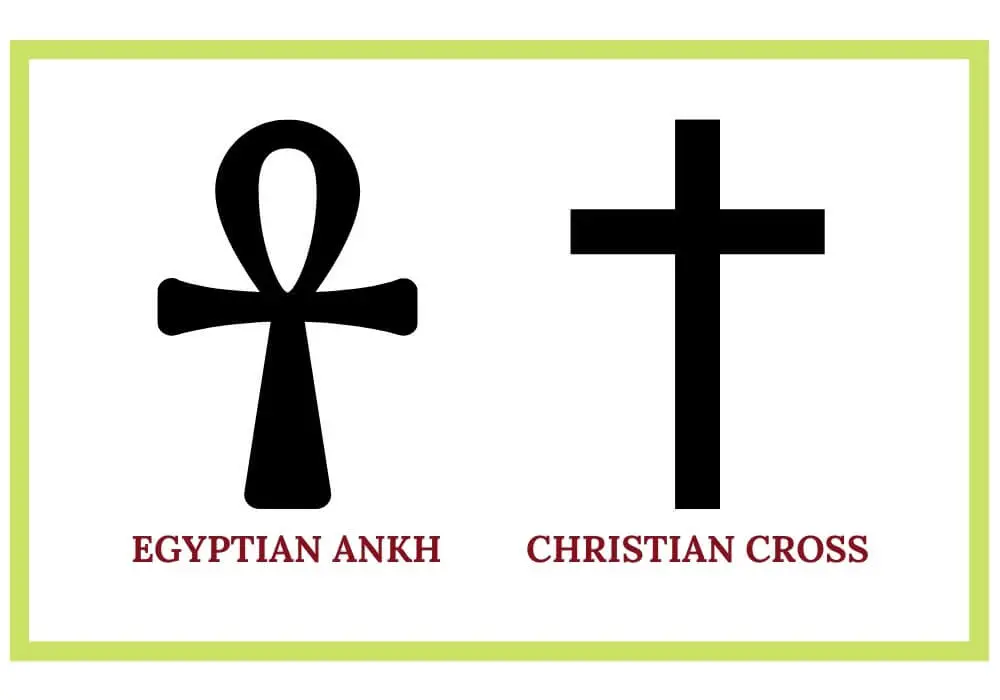
At its core, the Ankh is a symbol of life. Not just biological life, but eternal, spiritual life — a theme that resonates strongly with many Christian beliefs. In fact, early Coptic Christians in Egypt used a nearly identical symbol, called the crux ansata (“cross with a handle”), which was adapted from the Ankh and used to represent everlasting life through Christ.
Wearing the Ankh doesn’t mean you worship ancient Egyptian gods. It can simply represent your reverence for life, spiritual rebirth, or divine energy — concepts that exist across many faith traditions. Like the cross, the Ankh points toward something beyond the physical.
So, if your personal connection to the Ankh uplifts your faith rather than contradicts it, wearing it isn’t just “okay” — it’s a meaningful way to embody your spiritual path.
“The deeper the symbol, the more bridges it builds.”
— Anonymous (probably a monk… or a mystic on Instagram)
Ankh vs. The Christian Cross: Shared Symbolism
While visually distinct, the Ankh and Christian cross share more than meets the eye. Both symbolize life after death. Both were used as amulets of protection. And both carry geometric simplicity that encodes profound metaphysical concepts.
| Symbol | Primary Meaning | Spiritual Themes |
|---|---|---|
| Ankh (☥) | Eternal Life, Balance | Union of heaven & earth, sacred breath, fertility, divine protection |
| Christian Cross (✝) | Resurrection, Salvation | Faith, sacrifice, redemption, eternal life through Christ |
Some scholars suggest that early Christian communities in Egypt intentionally adapted the Ankh’s form to make the emerging faith feel familiar and accessible within a highly symbolic Egyptian culture.
Whether you’re drawn to the Ankh for its ancient beauty, cosmic symbolism, or spiritual parallels, it doesn’t need to be at odds with Christianity — unless your personal belief system tells you otherwise. For many, it’s not a contradiction — it’s a convergence.
FAQ: Questions About the Ankh You’re Probably Asking (or Too Shy to Say Out Loud)
Final Reflection: What Does the Egyptian Ankh Truly Symbolize?
Despite centuries of scholarship, the Ankh’s original meaning remains partially veiled in mystery. Yet across cultures and generations, its symbolic essence has endured — evolving, expanding, and echoing with meanings far deeper than its form suggests.
Today, the Ankh is understood as more than just an Egyptian character. It is a sacred archetype — a geometric key, a spiritual technology, and a vessel of ancient consciousness.
Across history, The Ankh has come to represent:
- 🔆 The Sun rising over the horizon, illuminating the rhythm of life and death
- 🌍 The Union of Heaven and Earth, symbolizing balance between spirit and matter
- 🧬 The Sacred Union of Masculine and Feminine energies — the generative polarity of creation
- 🌱 A Lifeforce Glyph, honoring vitality, breath, and divine authority
- 🕊️ A , offering safe passage for the soul
More than a hieroglyph, the Ankh is a mirror of a civilization that viewed life as sacred, infinite, and interconnected. Perhaps that’s why it still speaks to us — in a world that so often forgets these truths.
Whether worn as a piece of jewelry, etched into art, or contemplated in silence, the Ankh offers a gentle invitation: Remember what life really is — and what it could become.
Reflection: In an era obsessed with artificial intelligence and digital speed, the Ankh invites us back into organic wisdom — reminding us that the most powerful technologies may still be carved in stone.
**Thanks For Reading — Seriously**
If you made it this far, we genuinely appreciate your time. The Conscious Vibe exists to ask better questions, explore deeper ideas, and share curiosity that might spark a new idea or a new perspective.
If you found this article helpful, let us know and if this sparked something in you — share the vibe.
You may have noticed that there are no ads here. No popups. And we like it that way.
If you feel like donating to support more informative thought provoking ideas and information, we sincerely appreciate it !!
Check out our donation page to help Support Conscious Vibe
It helps cover servers, admin tools, and pretty much keeps the lights on around here.



Reading this site keeps me informed. It is exciting to learn about history, philosophy and mythology.