Social Media Profit Models: Making Billions
We used to be the audience.
Now we’re the inventory.
Social media promised connection — and in many ways, it delivered. But behind the filters, likes, and trending audio lies a far more complex machine. One that doesn’t just share content — it monetizes human attention with surgical precision.
You’re not just scrolling; you’re being tracked, profiled, and packaged for sale. Every pause, swipe, and interaction becomes fuel for a multi-billion-dollar data economy — where your behavior is the product, and prediction is the profit model.
These platforms don’t just reflect culture — they shape it. Economically, psychologically, politically. What looks like a free tool is actually a behavioral market, optimized to harvest engagement, monetize emotion, and quietly influence the trajectory of society.
In this deep dive, we break down the six primary revenue models that power social media — from targeted advertising to surveillance capitalism. If you’ve ever wondered how Big Tech became a trillion-dollar force, this guide will show you how it all works — and what it costs.
If you want to understand social media not just as a platform, but as a system — this article is your map.
How Social Media Companies Make Money: 6 Proven Business Models
Social media platforms aren’t just tools — they’re trillion-dollar ecosystems built to monetize human behavior. While they appear to be free, these platforms are anything but.
Behind the scenes, six core revenue models drive their exponential growth — monetizing your attention, data, decisions, and even your psychology.
In this section, we’ll break down these six monetization strategies — from hyper-targeted ads to algorithmic influence — and explore how your digital presence is quietly converted into profit.
1. Display Advertising: The Core Revenue Engine
Display advertising is the beating heart of most social media revenue models. These are the visual ads — images, videos, carousels — that appear seamlessly within your feed, often nestled between posts from friends or creators.
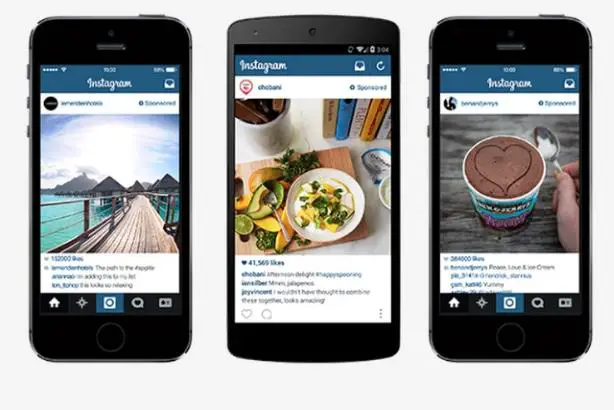
What makes these ads so potent is their surgical precision. Platforms like Meta and Google build detailed psychological profiles by tracking your digital behavior — every like, share, pause, comment, and scroll. Advertisers can then target you not just by age or geography, but by mood, mindset, and micro-interests.
According to a 2020 study on machine-learning optimization in ad targeting, algorithmically driven campaigns saw up to 30% greater engagement and 25% higher click-through rates compared to generalized placements. This increase in precision dramatically boosts return on investment — making advertisers more willing to spend, and platforms more eager to feed the machine.
In this way, your attention becomes the product — and optimized ad delivery becomes the mechanism for monetizing it, down to the millisecond.
2. Sponsored Content: Paid Influence at Scale
Sponsored content blends in with your feed — often disguised as organic posts. These could be boosted news articles, influencer posts, or opinion pieces designed to shift perception or behavior.
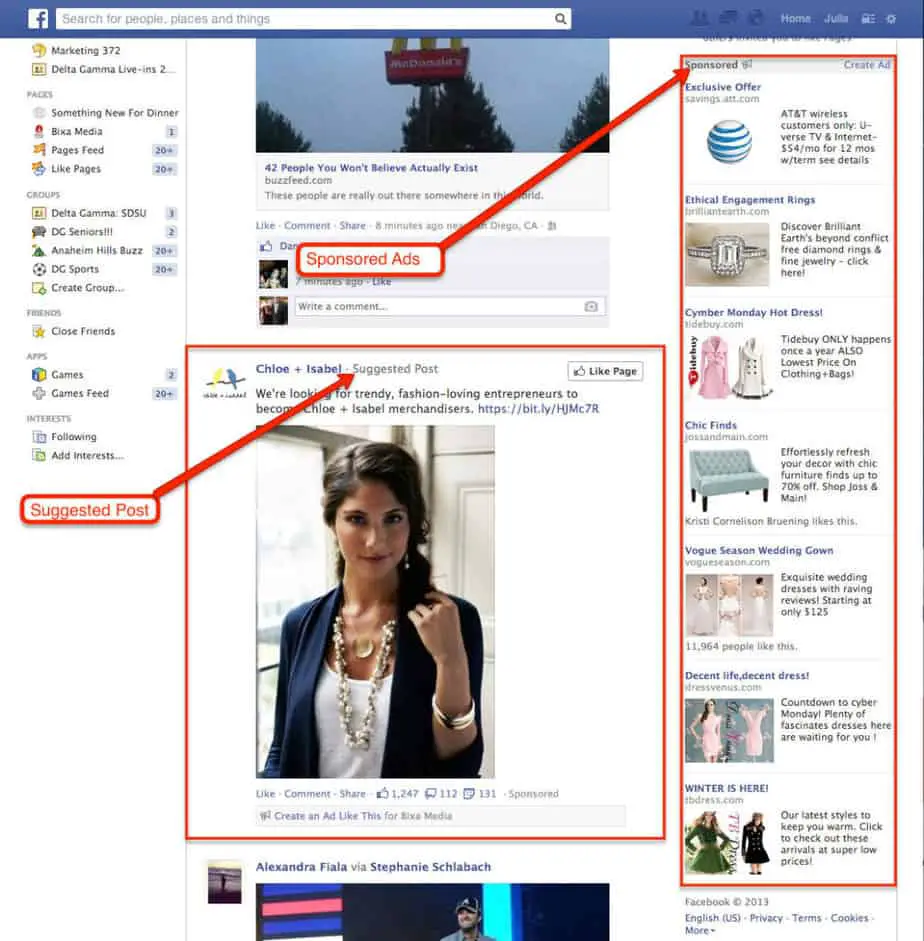
Unlike direct ads, the goal here is less about an immediate sale and more about narrative influence. Political campaigns, corporate agendas, and ideology-driven groups all use this model to target specific demographics with content crafted to persuade — not just sell.
Because over 80% of users only read headlines (Penn State), a well-sponsored article with a provocative headline can have immense persuasive reach — regardless of its truth or depth.
3. Subscriptions: Paying for Privacy and Premium Access
While ad revenue dominates, some platforms now offer premium, ad-free tiers. The subscription based economy like YouTube Premium, X Premium (formerly Twitter Blue), and Spotify Premium allow users to opt out of the paid add economy — for a fee.
This model appeals to users concerned about privacy, focus, or uninterrupted content — and to platforms seeking recurring revenue in a post-cookie world.
4. Transaction Fees and Platform Upcharges
Social media platforms also monetize marketplaces, creator tools, and third-party integrations. This includes seller fees (Facebook Marketplace), tipping and badge systems (Instagram), verification fees (X), and even developer access (Meta’s API licensing).
While these fees are a small slice of total revenue, the scale of the user base means even fractional charges generate millions — and foster platform lock-in.
5. Data Monetization: The Real Product is You
The most controversial model involves the sale and use of anonymized user data. Every action you take online is tracked, logged, and bundled into massive data sets — which are sold to advertisers, data brokers, and analytics firms.
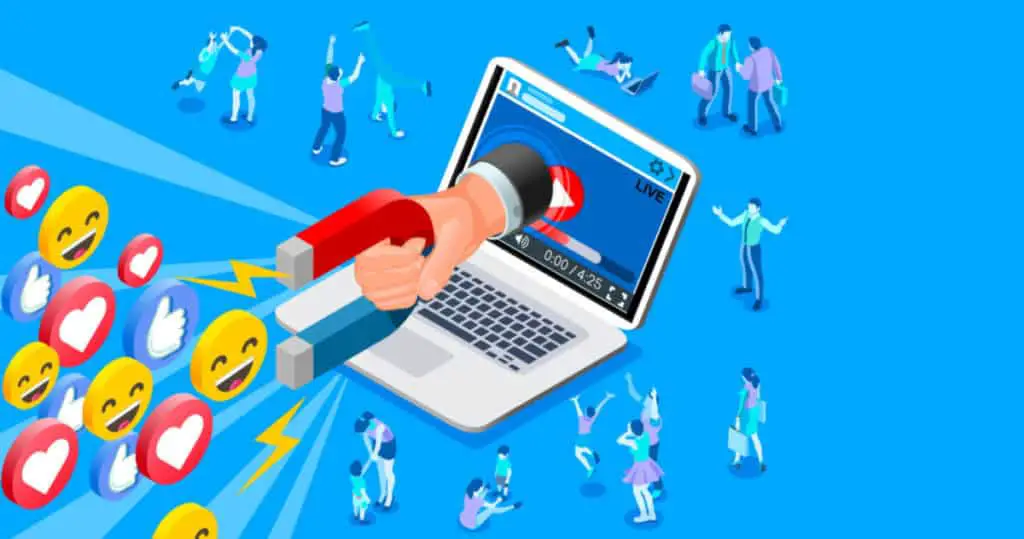
This is not personal information like phone numbers, but aggregate behavioral patterns: what topics trend in specific cities, how users react to news, when they’re most likely to click.
According to Twitter’s 2022 filings, roughly 13% of its revenue came from licensing user data. As Dr. Shoshana Zuboff explains in her work on surveillance capitalism, users are no longer just customers — they’re raw material in a prediction market that anticipates and influences their next move.
6. Venture Capital: Fuel, Not Revenue
Before profitability, social platforms rely on venture capital to grow fast, scale globally, and dominate market share. VC money is not revenue — it’s speculative fuel, invested with the expectation of future returns.
This financial structure often incentivizes growth at all costs — including the extraction of more user data and the engineering of more addictive algorithms to justify rising valuations.
Surveillance Capitalism: Turning Behavior into Profit
Social media platforms aren’t just delivering ads — they’re delivering prediction. While the apps appear “free,” their true cost is invisible: your data, your behavior, your digital patterns — mined, modeled, and monetized.

Unlike traditional advertising — where a cereal brand might cast a wide net on television — social media platforms offer micro-targeting so precise that a company can advertise yoga mats to left-handed graphic designers who also follow astrology pages and clicked on a meditation video last Tuesday. This isn’t just marketing — it’s behavioral engineering.
This system is what Harvard professor Dr. Shoshana Zuboff calls “surveillance capitalism” — an economic model where human experience is scraped for behavioral data, which is then fed into proprietary algorithms designed to predict what you’ll do next — and shape it.
“Prediction products”, as Zuboff names them, are the real currency — not your identity, but your future actions: what you’ll click, who you’ll vote for, what you’ll buy, and when you’ll break.
This predictive power is the gold mine. The more data collected, the more accurate the predictions. The more accurate the predictions, the more effective the ads. And the more effective the ads, the more platforms can charge — creating a feedback loop of surveillance-for-profit that rewards manipulation over mindfulness.
Even Maggie Clarendon, a tech ethicist and former platform strategist, notes: “Surveillance capitalism isn’t just about ads — it’s about control. You don’t pay with money. You pay with influence over your own choices.”
To be fair, some of this data is used to improve user experience: smarter recommendations, faster loading, better search. But these are side effects — not the goal. The core driver remains the same: extract behavioral data, transform it into predictive intelligence, and sell it.
In this system, users are no longer just the audience. They are the product, the content, and the collateral — all at once.
Which raises a sacred question: if your attention is the most valuable currency online… who are you giving it to?
What Are Social Media Algorithms (And How Do They Drive Profit?)
At their core, algorithms are sets of rules — mathematical instructions that tell a machine what to do, and when. In social media, however, they’ve evolved into something far more powerful: behavioral architects.

Unlike a basic algorithm that might send a pop-up after 15 seconds on a website, social media algorithms ingest billions of data points in real-time to curate your feed. They decide what to show you, in what order, and how often — all based on your unique digital fingerprint: your scroll rate, click patterns, watch time, even your hesitations.
But these algorithms don’t just reflect your preferences — they shape them. They are designed to maximize what economists call platform stickiness: the amount of time you stay engaged, so more ads can be served, and more revenue extracted.
How Algorithms Balance Engagement and Revenue
The challenge for social media platforms is delicate: show too many ads, and users get irritated. Show too few, and profits dip. Algorithms solve this by dynamically testing and adjusting ad frequency based on your behavior. For example:
- Should you see an ad after 3 friend posts or 7?
- Should you see a sponsored video immediately, or after a reel binge?
- Should ads match your recent Google search — or your subconscious browsing history?
This micro-adjustment happens constantly. According to a 2021 study in *Big Data & Society*, machine learning models now integrate emotional and behavioral cues in real time, increasing engagement rates by up to 28% across tested user segments.
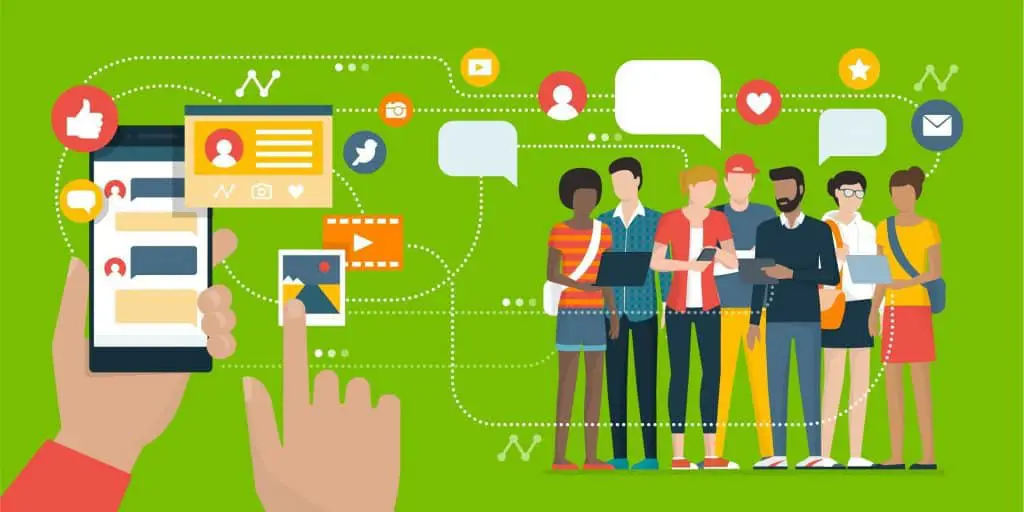
In essence, the algorithm becomes a kind of invisible guide — a puppeteer balancing two goals: keep you hooked and maximize monetization.
“The algorithm knows when you’re vulnerable, and it knows how to keep you watching.” — former Facebook engineer (as cited in *The Social Dilemma*)
And while platforms may say they’re optimizing for “relevance,” the truth is more mathematical: they’re optimizing for attention — because attention = impressions, and impressions = revenue.
So the next time your feed seems uncannily aligned with your mood, remember — it’s not coincidence. It’s code.
The Ethics of Engagement: Are Social Media Algorithms Addictive?
Every time you open a social media app, you’re not just seeing content — you’re seeing a mirror customized by code. Your feed is algorithmically engineered to reflect your preferences, trigger your impulses, and stretch your attention span — just far enough to keep you scrolling.

What you see isn’t what others see. Each user inhabits a personalized content bubble, shaped by prior behavior, interaction history, and psychological profiling. While viral posts ripple outward, the core of your feed is tailor-made to hook you, not inform you.
And it works. Social platforms are built on what psychologists call intermittent variable rewards — the same dopamine system that makes slot machines addictive. You never know which post will light up your brain — but maybe the next one will.
That’s not just coincidence — it’s design. Platforms send you push notifications, email nudges, algorithmic highlights, and dopamine drip-feeds not to serve you — but to serve their metrics. Engagement = data. Data = revenue.
“If you’re not paying for the product, you are the product.”
Imagine if your tape measure constantly sent you reminders to measure things, even when you didn’t need it. Absurd? That’s what social media does — because unlike your tools, it profits from your attention.
Conscious Use: Reclaiming Your Attention in the Digital Age
Social media isn’t evil — but it is engineered for addiction. Like alcohol, it can be a pleasant social lubricant or a destructive dependence. The difference? Awareness + moderation.
Two hours of social scrolling a day may feel harmless, but studies increasingly link heavy usage with elevated anxiety, disrupted sleep, and distorted self-perception — especially in younger users
To reclaim sovereignty over your digital mind, consider practicing what we call conscious tech hygiene — the art of noticing your usage patterns and realigning them with your intentions.
- Pause before opening an app — ask: why am I here?
- Turn off non-essential notifications
- Replace passive scrolling with active learning
- Designate sacred screen-free hours
These practices aren’t about perfection — they’re about presence. When you use social media from a grounded place, you transform it from a manipulative algorithm to a conscious tool.
Remember: your attention is sacred. Guard it like you would your breath, your time, your energy. Because in the attention economy — those are the new currencies of freedom.
FAQ: The Real Cost of Social Media (with a Wink)
Final Reflection: The Cost of Free Social Media
Social media offers one of the most profound paradoxes of modern life: a “free” tool that connects the world — while profiting from your disconnection from self, presence, and truth.
To keep these platforms free, they must be addictive. And to be addictive, they must know you better than you know yourself. Your data — not just what you click, but how long you hover, what triggers you emotionally, and when you’re most vulnerable — becomes the blueprint for digital persuasion.
This isn’t just advertising. It’s algorithmic conditioning. A system optimized not for your growth, but for your engagement. Not to inform, but to keep you online — because your attention is the raw material of profit.
Sure, a hammer can build a home or break a window. But if that hammer constantly whispers your name and vibrates in your pocket, begging to be used — is it still just a tool?
The question isn’t whether ads belong on social platforms. The deeper question is this:
What happens when predictive algorithms understand your decisions better than your own awareness does — and act on them before you even blink?
The cost of “free” is not financial — it’s cognitive. It’s your sovereignty. It’s the erosion of quiet mind and uncurated thought. But awareness is power. And reclaiming your attention may be the most radical act of self-liberation in the digital age.
If your attention is the currency, then awareness is your savings account. Protect it. Invest it wisely. And remember: the most valuable thing you can give a system — is nothing at all.
**Thanks For Reading — Seriously**
If you made it this far, we genuinely appreciate your time. The Conscious Vibe exists to ask better questions, explore deeper ideas, and share curiosity that might spark a new idea or a new perspective.
If you found this article helpful, let us know and if this sparked something in you — share the vibe.
You may have noticed that there are no ads here. No popups. And we like it that way.
If you feel like donating to support more informative thought provoking ideas and information, we sincerely appreciate it !!
Check out our donation page to help Support Conscious Vibe
It helps cover servers, admin tools, and pretty much keeps the lights on around here.