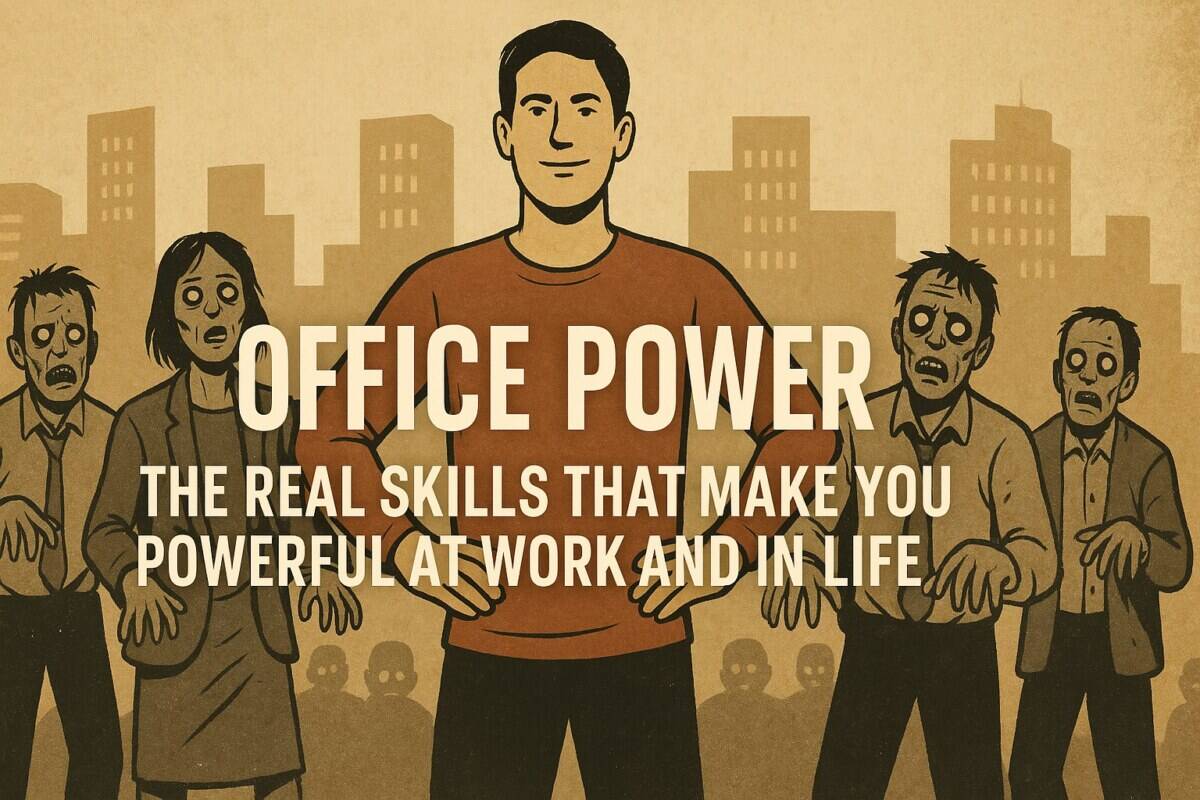
Office Power: The Real Skills That Make You Powerful at Work and in Life
🔹 Introduction: The Silent Cost of Modern Work
In the modern workplace, a silent crisis is unfolding beneath polished résumés and well-lit Zoom calls. Professionals are hitting targets, collecting promotions, and outwardly “winning”—yet many quietly report a growing sense of personal disconnection, burnout, and identity erosion.
Why? Because in high-pressure corporate environments, it’s easy to internalize the message that your value = your output. Over time, we start to conflate our identity with our job title, our worth with our performance, and our moral compass with what’s “good for business.”
This isn’t just philosophical—it’s neuroscientifically and sociologically grounded. Studies in occupational psychology show that prolonged over-identification with a company leads to elevated cortisol levels, chronic stress, and loss of cognitive autonomy (Maslach, 2001; Hakanen et al., 2006). Sociologist Max Weber warned over a century ago of the “iron cage” of bureaucracy—where identity is swallowed by institutional roles, and free will is traded for functional obedience.
This guide is your blueprint for breaking that cage open.
We’ll show you how to succeed without selling your soul, how to build lasting influence without becoming a corporate echo chamber, and how to earn deep respect—regardless of title—by mastering the inner skills that matter most.
🔹 Part I: Foundations of Workplace Effectiveness (That Don’t Require a Degree)
1. The Most Valuable Skills No One Teaches in School
- Emotional Intelligence (EQ): In fast-moving environments, your ability to read tone, body language, subtext, and social power dynamics is more important than raw intelligence. High EQ employees are 4x more likely to be top performers (TalentSmart, 2020).
- Managing Up: This is not about flattery—it’s about anticipating needs, aligning with priorities, and reducing friction. The best professionals make their manager’s job easier without surrendering autonomy or boundaries.
- Negotiation & Strategic Communication: The most influential people don’t speak the most—they speak the most effectively. Learn when to speak, how to structure your message, and how to align incentives in every interaction.
- Egolessness & Curiosity: Growth is not about being right—it’s about getting it right. Curiosity accelerates learning. Letting go of ego builds trust and enables fast iteration through feedback.
2. Why College Degrees Often Fail in the Real World
- Outdated Curriculum vs. Real-World Feedback Loops: Academia rarely reflects the dynamic, high-stakes problem-solving required in actual work environments. You don’t get points for theory—you get rewarded for execution.
- Soft Skill Deficiency: College teaches content, but rarely teaches how to listen deeply, manage conflict, inspire a team, or navigate office politics. Yet these soft skills drive promotions more than any technical skill.
- Over-Specialization: Modern roles demand cross-functional thinking. The ability to adapt, learn fast, and think systemically often beats deep expertise in a narrow silo. The future belongs to the versatile generalist, not just the credentialed specialist.
🔹 Part II: The Real Levers of Power at Work
3. Soft Power Over Loud Power: What Actually Builds Influence
In modern workplaces—just like in geopolitics—soft power often outperforms brute force. Coined by political scientist Joseph Nye, soft power is the ability to influence others not through coercion, but through credibility, attraction, and emotional intelligence. The same holds true in offices: People follow those who stay grounded, make others feel safe, and consistently solve problems.
- Speak Last, But Say the Thing That Matters Most: Neuroscience shows that people remember the final speaker in a conversation the most. Waiting to speak gives you time to assess the power dynamics and deliver the insight that shifts the room. This is the essence of executive presence.
- Lead With Solutions, Not Complaints or Ego: Effective professionals frame problems with clarity and immediately pivot to value-oriented proposals. This reframes you as a strategic thinker—not a complainer or tactician.
- Stay Calm Under Pressure—Emotional Agility Is Magnetic: Psychological research confirms that people with emotional regulation skills are more trusted, promoted more often, and seen as natural leaders (Goleman, 1998). When others are reactive, your calmness becomes power.
4. The Office Effectiveness Playbook: What Makes a High-Impact Professional
Being truly effective isn’t about working longer—it’s about operating at a higher level of awareness, execution, and relational intelligence. In complex systems (like fractal economies or corporate ecosystems), influence is nonlinear. Small, well-placed actions can have exponential impact.
- Master the Unwritten Rules of Culture and Power: Every organization has an invisible rulebook. Learn who holds informal power, how decisions are really made, and which values are rewarded. Adapt without losing authenticity.
- Communicate with Precision and Purpose: Data from Harvard Business Review shows that poor communication is one of the top 3 reasons for project failure. Clarity is strategy. Think in terms of signal, not noise.
- Be Reliable, Be Consistent, Be Known for Getting It Done: Reliability signals trustworthiness in all human cultures (even in tribal societies). Become the person others depend on when stakes are high.
- Focus on Outcomes, Not Activity: Don’t confuse motion with progress. Ask: “What is the impact of this?” This mindset separates tactical workers from strategic leaders.
- Guard Your Reputation—It’s Career Currency: Your personal brand inside the company is a trust fractal: every microinteraction scales up to your perceived value. Protect it. Cultivate it.
🔹 Part III: Leadership Without Authority
5. How to Lead from Any Seat
You don’t need a title to lead—you need clarity, presence, and the ability to generate momentum. Leadership today is more distributed and psychological than hierarchical. Influence flows through networks, not org charts.
- Influence Without the Title: True leadership is the ability to affect outcomes and shape culture—whether or not you’re in charge. It’s built on consistent contribution, emotional presence, and trustworthiness.
- Speak in “We” Language: Inclusive language primes collaboration. When you say “we,” you activate shared identity—one of the most powerful triggers for team alignment (Tajfel & Turner, Social Identity Theory).
- Shine the Light on Others—It Reflects Back: Giving credit elevates your social capital. Studies show leaders who recognize others are rated as more trustworthy and competent by peers and superiors alike (Zenger & Folkman, 2014).
6. Managing Up Without Manipulation
Managing up isn’t about playing politics—it’s about building alignment and earning trust in both directions. Your relationship with your manager is a high-leverage axis of power in your career.
- Learn Your Manager’s Pressure Points and Style: What are they accountable for? What’s their communication style? What keeps them up at night? Knowing this lets you support them proactively.
- Anticipate Needs Before They’re Voiced: The most valuable people on any team see around corners. This positions you not just as a contributor, but as a strategic asset.
- Be the Person They Can Rely On—Every Time: Trust is built through consistency. When your boss knows they can delegate without worry, you become indispensable.
🔹 Part IV: Identity Armor in the Age of Corporate Culture
7. The Corporate Cult: How It Quietly Erases Your Identity
One of the most subtle yet dangerous dynamics in modern work culture is the slow erosion of personal identity through over-identification with the company. This is not new—it’s a well-documented phenomenon in sociology and organizational psychology. But in today’s hyper-connected, performative culture, it has intensified.
- The Myth of the “Company Family”: While connection at work is valuable, the idea that your employer is “family” is often a psychological trap. In reality, businesses are economic organisms, not relational ones. Loyalty should be earned, not assumed.
- The Trap of “We” Language and Moral Outsourcing: When we begin saying “we” to describe the actions of a brand, we often blur personal ethics with corporate interests. This is a classic case of moral outsourcing—a pattern that leads to internal dissonance, disempowerment, and groupthink.
- How Loyalty Turns Into Blind Obedience: In the absence of mindfulness and self-reflection, loyalty morphs into submission. What starts as dedication becomes unconscious conformity, draining creativity, vitality, and sovereignty.
In the language of yoga and quantum awareness, identity is energy directed with intention. When that intention is unconsciously hijacked by external systems, we collapse the wave function of our potential into someone else’s story. The result? Burnout, disillusionment, and a fractured sense of self.
8. How to Stay Grounded, Separate, and Self-Owned
True leadership and longevity in any career depend on your ability to remain centered and self-directed—even as you contribute fully to the mission.
- Treat Work as a Partnership, Not a Personality: Your job is not your identity. Approach your work as a conscious contract—you give time, energy, and expertise in exchange for compensation and growth. Keep emotional boundaries clear.
- Keep a Life Outside the Brand: Studies in neuroscience and well-being show that multidimensional identity—having hobbies, social groups, and creative outlets—builds resilience and reduces anxiety. Invest in life outside of work as your true foundation.
- Ask Regularly: “Am I Still Becoming Who I Want to Be?” This question is your compass. Revisit it monthly. If the answer is consistently “no,” it’s time to reevaluate your trajectory. The best investors, leaders, and visionaries ask this in every domain of life.
Staying grounded doesn’t mean opting out. It means choosing how you show up—with integrity, presence, and sovereignty intact.
🔹 Part V: Practical Habits That Protect Confidence, Presence, and Growth
9. What to Avoid to Build Lasting Confidence
Confidence is not charisma—it’s self-trust built over time. And often, it’s what you don’t do that defines whether it grows or erodes.
- Don’t Over-Apologize, Over-Explain, or Wait for Permission: These habits signal insecurity and create micro-perceptions of low value. Instead, ask clearly, state succinctly, and move forward with grounded clarity.
- Ditch the People-Pleasing and Own Your Voice: True respect comes not from being agreeable, but from being authentic and values-aligned. Speak truthfully—without aggression, but with courage.
- Never Let External Praise Become Your Inner Anchor: The moment your confidence depends on validation, you’ve outsourced your self-worth. Build your inner reference point. As Marcus Aurelius said, “It is not external things that disturb us, but our judgment about them.”
10. Daily Micro-Practices That Signal Leadership
In a world driven by attention and energy, the most subtle practices often create the greatest perceived power. These habits are grounded in both psychology and quantum awareness—small inputs, exponential ripple.
- Posture = Presence: Stand tall, spine aligned. Biomechanical studies show posture influences hormonal states (Carney et al., 2010)—boosting confidence, focus, and how others perceive your authority.
- Ask Strategic Questions That Reframe the Conversation: Don’t rush to speak. Instead, pause—and ask the question that clarifies, elevates, or redirects. This is pure power. It changes the vibration of the room.
- Follow Up Proactively, and Own Problems Before They Land: This builds deep trust and signals mature leadership. Be the person who sees what others miss—and acts before they’re asked.
🔹 Conclusion: Build a Career That Serves You (Not the Other Way Around)
The most powerful professionals share one timeless truth: they are not the company. They are creators, not just employees. They bring their full effort—but keep their full self.
You can rise through the ranks, earn respect, and make deep impact without merging your soul with a brand or losing your compass in the fog of performance metrics.
Influence without identity loss. Growth without burnout. Success without self-erasure.
This is how you do both.
**Thanks For Reading — Seriously**
If you made it this far, we genuinely appreciate your time. The Conscious Vibe exists to ask better questions, explore deeper ideas, and share curiosity that might spark a new idea or a new perspective.
If you found this article helpful, let us know and if this sparked something in you — share the vibe.
You may have noticed that there are no ads here. No popups. And we like it that way.
If you feel like donating to support more informative thought provoking ideas and information, we sincerely appreciate it !!
Check out our donation page to help Support Conscious Vibe
It helps cover servers, admin tools, and pretty much keeps the lights on around here.