The Meme Wars: How Mind Viruses, Identity Hijacks, and Emotional Propaganda Shape the Future of Consciousness
Meme’s Aren’t Necessarily Just Jokes
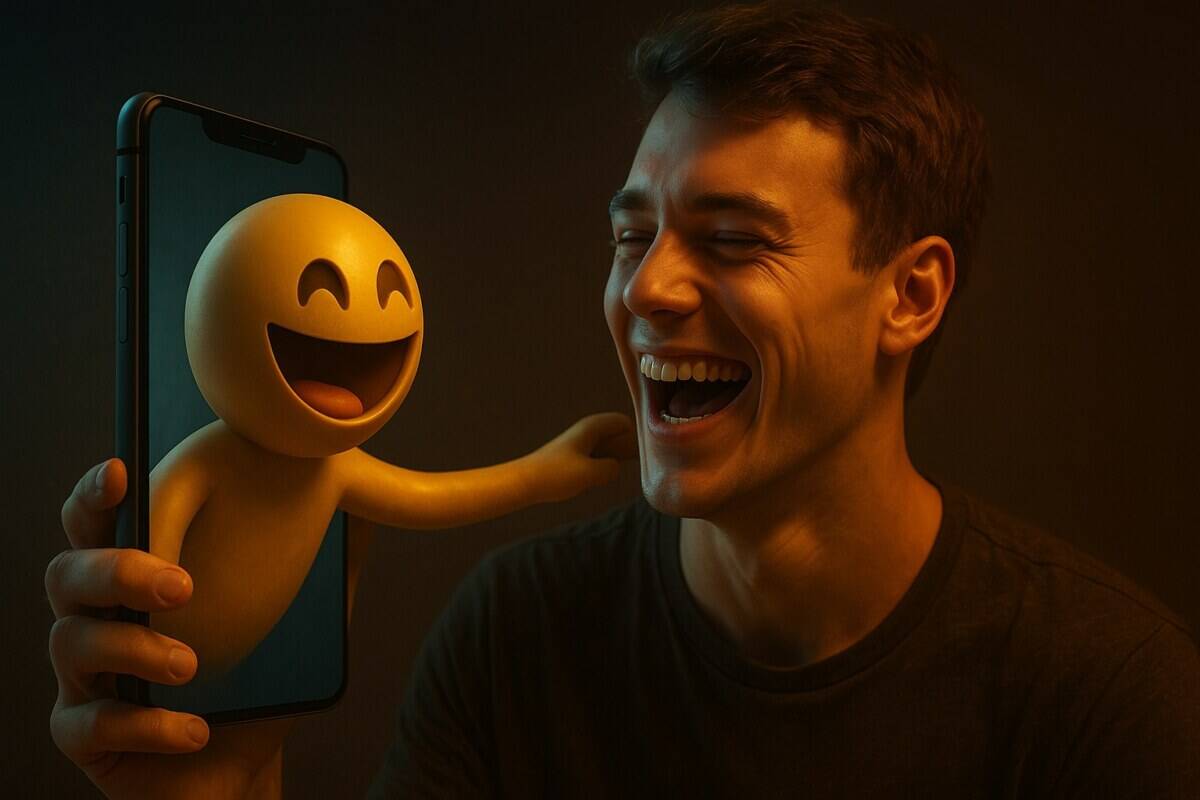
You’re not just scrolling. You’re absorbing.
Every meme you laugh at, repost, or ignore leaves a fingerprint on your nervous system.
We like to think our minds are sovereign—rational, immune, independent.
But in a world where attention is currency and emotional speed outpaces reflection, memes have become the operating system of belief.
What started as jokes and gifs have evolved into weapons of persuasion, optimized for virality, encoded with identity, and engineered to bypass logic entirely.
They don’t just reflect culture.
They rewire it.
This isn’t about internet culture.
It’s about the battlefield of your mind—and the silent war for what lives inside your emotional body.
Watch the breakdown: This 5-minute video sets the tone for everything that follows.
I. Meme = Spell: The Physics of Belief Transmission
A meme isn’t just a joke—it’s a spell.
It’s a short, emotionally charged unit of meaning that replicates itself through attention, imitation, and emotional resonance. In 1976, evolutionary biologist Richard Dawkins coined the word “meme” to describe an idea that spreads like a gene—based not on merit, but on replication.
But memes today aren’t just cultural genes. They’re more like neurological software updates, downloaded through your scroll. They don’t wait for permission. They don’t argue. They resonate.
“The brain doesn’t choose what’s true—it chooses what feels familiar and emotionally aligned.” — Dr. Lisa Feldman Barrett, neuroscientist
This is why satire spreads faster than science. Why conspiracy memes outperform policy papers. The meme makes you laugh first—and believe second.
“A meme is a Trojan horse. The joke is the disguise. The belief is the payload.”
II. The Mind Is Not a Fortress — It’s a Resonant Field
You’re not thinking in isolation.
You’re tuning.
Every idea you hear, every meme you scroll past, every conversation you absorb doesn’t just pass through your mind—it reverberates through your nervous system. And if it resonates deeply enough, it stays.
“We don’t think alone. We co-regulate our beliefs.” — Dr. Lisa Feldman Barrett, neuroscientist and author of How Emotions Are Made
Your brain is wired with mirror neurons, which are designed to copy what others feel and do. This was useful when we needed to mimic survival behaviors. Today, it means your nervous system is constantly echoing the emotional tone of your environment—even online.
And then there’s social proof: the subtle psychological bias that says if other people I trust believe this, it must be safe to believe too. So if your tribe is laughing at a meme, your brain’s emotional radar lights up with approval—even if it’s factually wrong.
This is why funny beats true.
Humor triggers dopamine, lowers your defenses, and creates what psychologists call “cognitive ease.” When something feels good and familiar, the brain treats it as more trustworthy—regardless of evidence.
So when a meme slips into your feed and makes you laugh?
That’s not just entertainment. It’s emotional conditioning.
“You don’t believe memes because they’re true. You believe them because they feel right.”
— ConsciousVibe
Core Pattern:
We don’t absorb beliefs through logic.
We resonate with them emotionally—and that’s how they install.
III. Half-Truths: The Most Dangerous Memes in the System
A full-blown lie is easy to spot.
But a half-truth? That’s the kind of virus your system lets in.
Cambridge Analytica didn’t win minds with facts—or with lies.
They used precision psychology to micro-target voters with emotionally engineered memes—each calibrated to match their existing values, fears, and frustrations.
These weren’t falsehoods.
They were narratives with just enough truth to feel safe, and just enough distortion to shift belief, stoke division, or suppress turnout.
“Half-truths are emotional malware. Once they’re in, logic won’t delete them.”
— ConsciousVibe
This is the real danger:
When a belief feels aligned with your identity or your tribe, you’ll defend it—even if it’s been designed to manipulate you.
And once belief fuses with identity?
Facts stop working. Logic becomes confrontation. And the meme becomes protection—even if it’s a Trojan horse for fear, anger, or control.
📉 Systemic Ripple:
Today, emotionally sticky memes outpace journalism.
Paid narratives, tribal jokes, and half-true slogans now shape elections, movements, and worldviews—not through debate, but through resonance warfare.
“We are not in an information age.
We are in a disinformation arms race.”
— Nina Schick, author of Deepfakes
Key Takeaway:
Half-truths don’t win because they deceive.
They win because they feel like home.ral narratives now shape elections, movements, and belief systems more than debates or journalism.
IV. When the Meme Becomes You: Identity Hijack in Real Time
You don’t always know when it happens.
At first, it’s just a meme—funny, catchy, true enough to share.
But then you post it again.
You defend it in comments.
You build your tribe around it.
And before long…
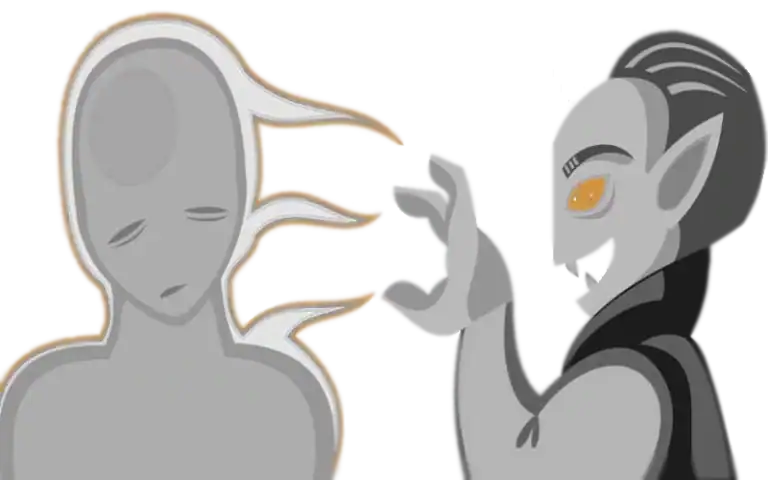
you don’t just believe the meme. The meme believes through you.
“You don’t spread memes. Memes spread you.” — ConsciousVibe
The Most Dangerous Memes Aren’t the Loudest—They’re the Closest to Self
When a meme fuses with your identity, it becomes more than an opinion—it becomes a proxy for who you are.
And here’s where it gets dangerous:
When someone questions the meme, your nervous system hears it as a threat to your survival.
This is called identity fusion.
Psychologists like Dr. William Swann have shown that when beliefs become fused with the self, people will defend them as fiercely as they would defend their own bodies.
Why Debate Doesn’t Work Anymore
Think about it:
Have you ever tried to argue with someone online and felt like you were talking to a wall?
It’s not because they’re stupid.
It’s because you’re not challenging a fact—you’re challenging a sense of self.
Studies from the University of Southern California’s Brain and Creativity Institute show that when core beliefs are threatened, the brain’s amygdala and insular cortex light up—regions associated with pain, fear, and self-preservation.
“To the ego, being wrong feels like dying.”
Meme as Tribal Armor
In a world of polarization and uncertainty, memes offer more than meaning.
They offer belonging.
You don’t just share a meme because it’s true.
You share it because it says: “I’m with these people. I’m not alone.”
And that kind of emotional safety can be intoxicating.
But it comes at a price: You stop thinking for yourself.
“The real danger of memes isn’t that they’re false.
It’s that they feel like home.”
📉 Core Pattern (Visual Aid):
| Emotional Priority | Cognitive Bypass Triggered |
|---|---|
| Belonging | > Logic |
| Identity Reinforcement | > Nuance |
| Emotional Safety | > Objective Truth |
Key Takeaway:
When your ego wraps itself around a meme, it becomes immune to evolution.
But when you notice the fusion, you can start to unhook.
You can remember:
You are not the meme.
You are the medium.Core Pattern: Belonging > logic. Identity > nuance. Emotional safety > truth.
V. Truth Doesn’t Go Viral — But Sovereignty Can
If truth were enough, the world would already be healed.
But truth doesn’t go viral.
It’s too slow. Too complex. Too quiet.
Memes do.
Not because they’re true—but because they’re emotionally efficient. They offer an instant hit of meaning, identity, and belonging. That’s why they travel farther than nuance, faster than evidence.
So if you want to reclaim your mind in the middle of the noise, you don’t need more information.
You need narrative sovereignty.
That means building your own internal filter.
Pausing before you share. Asking:
“Whose voice is this?
Whose interest does this meme serve?”
Because in the attention economy, what you share is who you serve.
The Sacred Pause
Neuroscience shows that emotional triggers shrink the prefrontal cortex—the part of the brain responsible for decision-making and empathy.
But even a moment of awareness interrupts that reflex.
This is where narrative immunity begins—not with facts, but with presence.
“A sacred pause is more powerful than a thousand counter-arguments.”
— ConsciousVibe
When you reclaim your pause, you reclaim your power.
And when enough people reclaim it, sovereignty itself begins to spread.
VI. Memes as Medicine: Turning Culture into Consciousness
Memes don’t have to manipulate.
They can also liberate.
The same structure that delivers outrage can deliver clarity.
The same container that spreads fear can spread beauty, awareness, and awakening.
“The next evolution of media is not louder propaganda.
It’s frequency medicine disguised as culture.”
A sacred meme doesn’t tell you what to think.
It invites you to see more clearly.
It doesn’t contract your identity into a tribe.
It expands it into possibility.
Anatomy of a Consciousness-Raising Meme:
- Emotionally clean → No manipulation or shame triggers
- Identity-expanding → Encourages reflection, not division
- Poetic and elegant → Uses metaphor, rhythm, or beauty
- Grounded in awe → Invokes curiosity, not outrage
- Shareable by nature → Because it’s beautiful, not weaponized
When we start designing with this kind of care and clarity, memes become more than cultural artifacts.
They become mirrors of our maturity.
Reflections of what we truly want to embody, not just what we want to react to.
Because in the end, we don’t just consume memes.
We become the frequencies we amplify.
VII. Final Thoughts: You Are the Medium Now
In this world of endless scroll and memetic warfare, you are not just a consumer.
You are a transmitter. A tuning fork. A node in the global mind.
Every joke you share is a ritual.
Every “like” is a spell cast.
Every meme you amplify becomes part of what people believe—and who they become.
So the question is no longer, “Is this meme true?”
The question is:
“Do I want this idea living inside me—and replicating through me?”
Because in the end, you are the algorithm.
You are the firewall.
You are the last sovereign terrain in a world designed to hijack attention.
And that means you hold the power to do something most never will:
To pause.
To choose.
To transmit truth—through clarity, through humor, through beauty.
Not louder propaganda.
But frequency medicine disguised as culture.
Call to Action:
If this sparked something deeper in you—
join the ConsciousVibe newsletter for sacred insight drops on psychology, sovereignty, and systems thinking.
Together, we’re not just decoding memes.
We’re building a new kind of media—
One that heals, instead of hijacks.
One that upgrades the system from within.
TL;DR:
- Memes bypass logic and shape beliefs through humor + emotion
- Half-truths are more dangerous than lies because they feel real
- You are the algorithm now—choose your signal wisely
**Thanks For Reading — Seriously**
If you made it this far, we genuinely appreciate your time. The Conscious Vibe exists to ask better questions, explore deeper ideas, and share curiosity that might spark a new idea or a new perspective.
If you found this article helpful, let us know and if this sparked something in you — share the vibe.
You may have noticed that there are no ads here. No popups. And we like it that way.
If you feel like donating to support more informative thought provoking ideas and information, we sincerely appreciate it !!
Check out our donation page to help Support Conscious Vibe
It helps cover servers, admin tools, and pretty much keeps the lights on around here.